2025: Joby Continues Pioneering The Air Taxi

2025 was a landmark year for Joby Aviation. While commercial passenger service has not yet begun, the company made meaningful progress toward transforming electric vertical takeoff and landing aircraft from an ambitious concept into a viable transportation service.
The company advanced flight testing, expanded internationally, continued working through the certification process, and strengthened partnerships that could ultimately help bring air taxis into everyday use. While significant challenges remain, 2025 was arguably the year Joby began looking less like an aerospace startup and more like a future transportation operator.
Dubai Takes the Lead
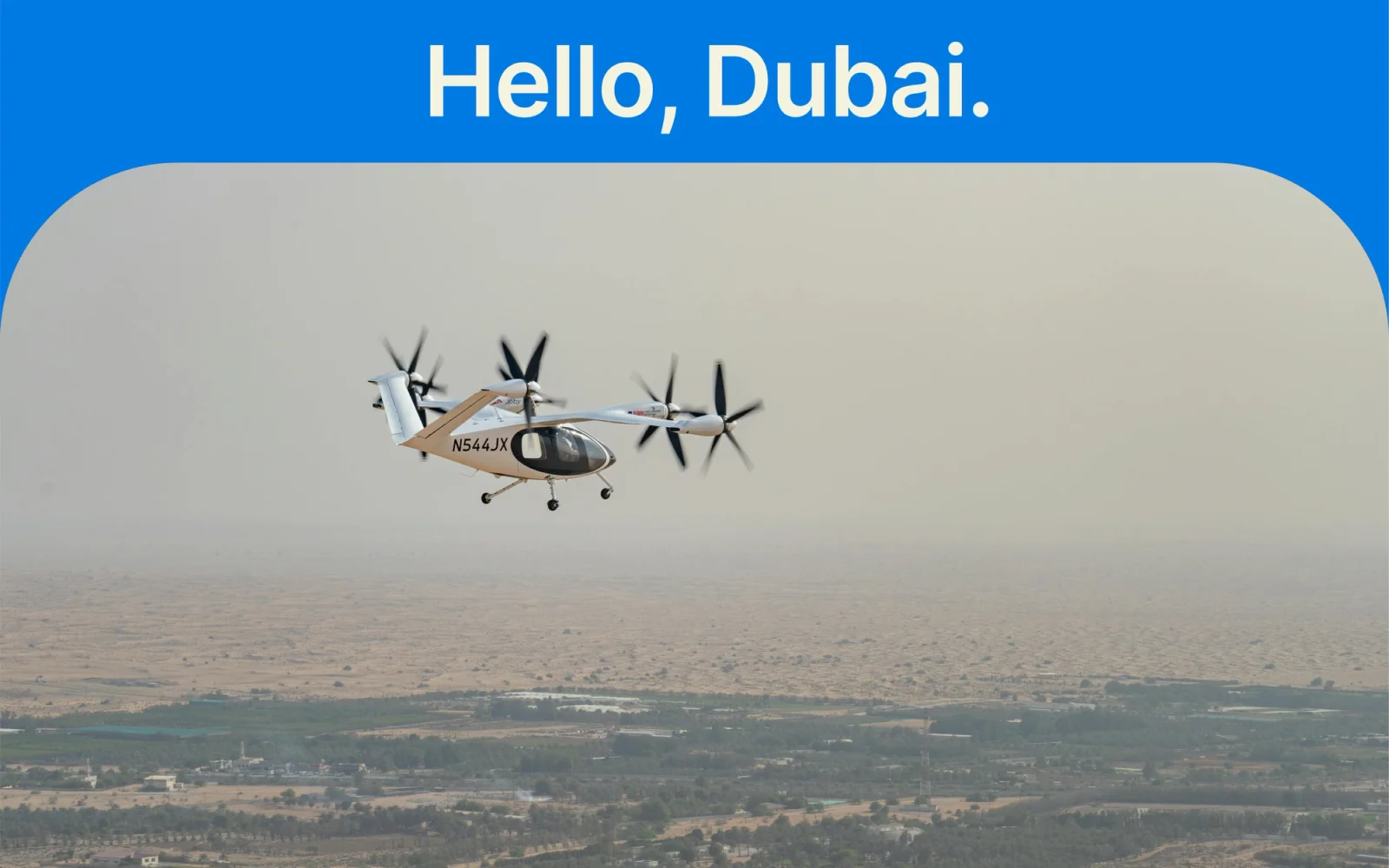
Dubai is emerging as a pioneer in hosting advanced transportation technologies. In 2025, Joby delivered its first aircraft to the United Arab Emirates, signaling a shift from domestic testing toward international deployment. Dubai is supporting these efforts by building infrastructure for eVTOL operations and treating them as part of its long-term transportation strategy rather than a temporary pilot program.
 Dubai
Dubai
The city offers a unique environment for early adoption. Dense development, strong tourism demand, major airport traffic, and government support make Dubai one of the most attractive launch markets for urban air mobility. If commercial air taxi service succeeds anywhere first, Dubai has positioned itself as a leading candidate.
Beyond the Test Range
Elsewhere, Joby continued pushing its aircraft beyond controlled demonstrations and into real-world operations.
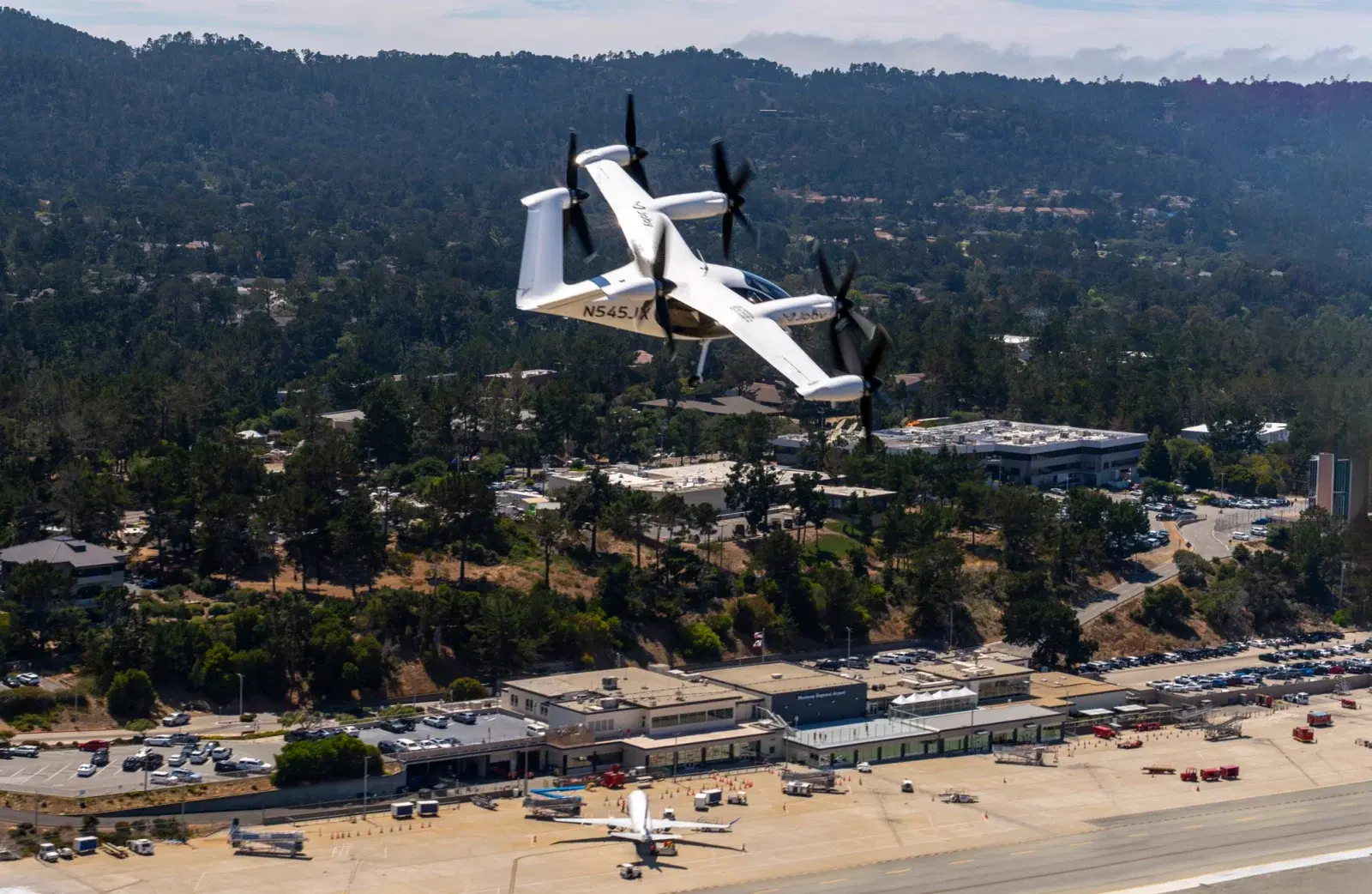
The company completed airport-to-airport flights in California, demonstrating that its aircraft can operate within existing aviation environments rather than solely around dedicated test facilities. These flights required coordination with air traffic procedures and existing airport infrastructure, helping validate the operational side of the business.
This distinction is important. Building an aircraft is only part of the challenge. Building a transportation network requires integration with airports, regulators, maintenance facilities, and passenger operations. In 2025, Joby took several steps toward proving that its aircraft can function as part of a broader transportation system.
The Long Road to Certification
For all the excitement surrounding eVTOLs, certification remains the industry's greatest challenge.
Joby continued advancing through the FAA certification process throughout 2025, accumulating testing data and validating systems required for commercial operation. While certification may not generate headlines like demonstration flights, it is arguably the most important work being done behind the scenes.
The aviation industry is built on safety, and regulators must be confident that entirely new aircraft designs can meet the same standards expected of conventional aviation. Until certification is complete, widespread commercial deployment remains out of reach.
Toyota's Growing Influence
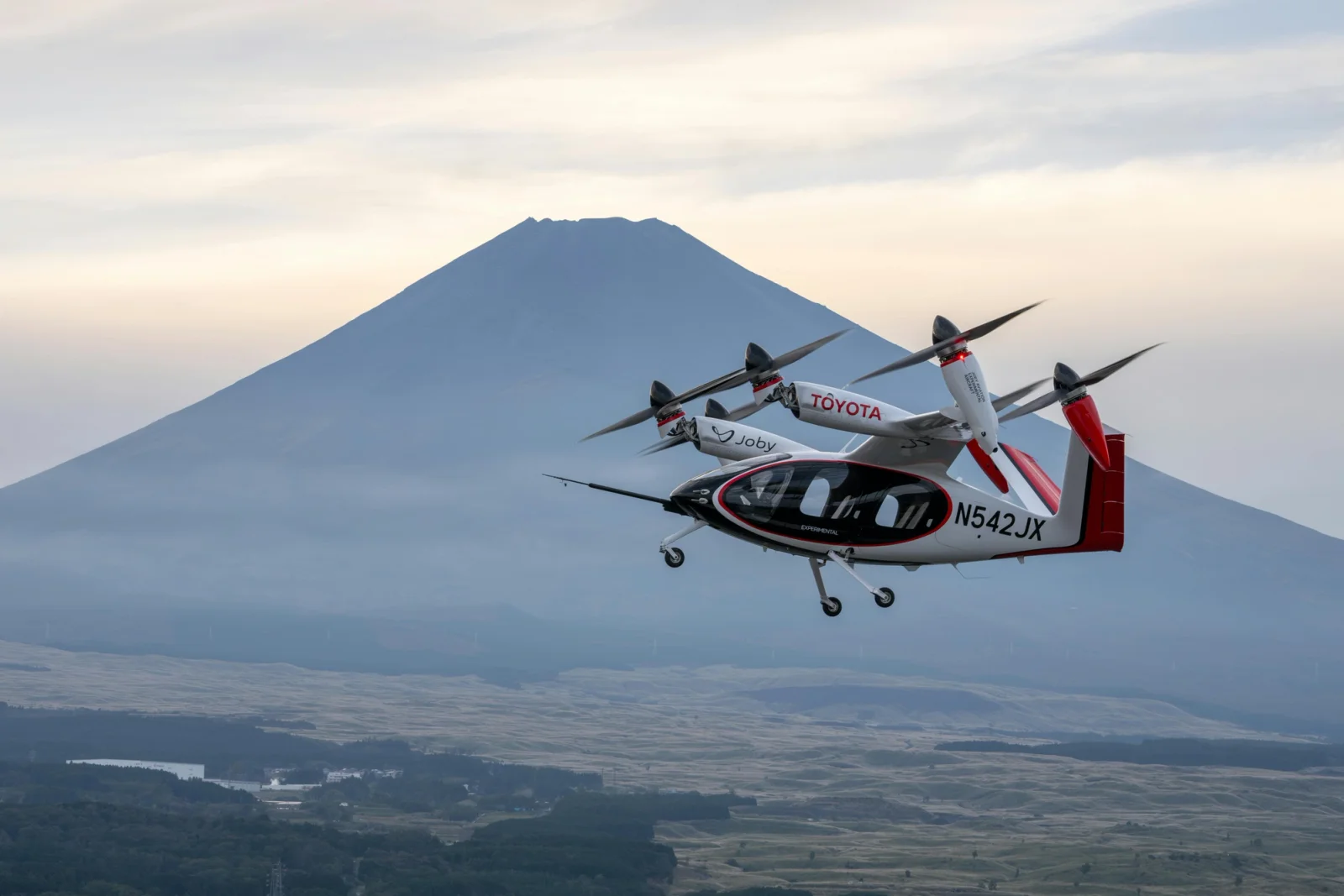
Toyota continued expanding its role within Joby during 2025, providing both capital and manufacturing expertise.
 Toyota
This partnership may prove to be one of Joby's greatest advantages. Designing an aircraft is difficult, but producing thousands of aircraft reliably and economically presents an entirely different challenge. Toyota's decades of experience in manufacturing, quality control, and production scaling could become critical as Joby moves toward commercial operations.
The relationship also highlights a broader trend: the future of advanced air mobility may depend as much on manufacturing execution as on aerospace innovation.
Taking Flight in Japan
Joby's ambitions extend well beyond the United States.
In 2025, the company conducted demonstrations in Japan, including appearances connected to Expo 2025 and events supported by Toyota. These demonstrations introduced the technology to a broader international audience while helping establish relationships in another market interested in advanced transportation solutions.
Japan faces many of the same transportation challenges that make eVTOLs attractive elsewhere, including dense urban areas and the need for efficient regional mobility. While commercial operations remain some distance away, the groundwork is being laid for future expansion.
Building the Ecosystem
Developing the aircraft itself is only one part of an air taxi service.
A successful operation requires booking systems, maintenance facilities, trained pilots, vertiports, passenger handling procedures, and integration with existing transportation networks. In 2025, Joby continued investing in these supporting elements while working with partners to develop the infrastructure needed for future service.
 Vertiport
The company's strategy increasingly reflects a transportation operator rather than simply an aircraft manufacturer. This shift may ultimately be one of the most significant developments of the year.
The Manufacturing Challenge
Building the aircraft at meaningful volume remains an enormous challenge.
Commercial success will require significant investments in production facilities, supply chains, workforce development, and quality assurance. Manufacturing a handful of prototypes is very different from producing hundreds or thousands of aircraft while maintaining aviation-grade reliability.
As certification progresses, manufacturing may become the defining challenge of the next phase of Joby's growth.
Looking Beyond Air Taxis
Although air taxis remain the company's primary focus, Joby continued exploring opportunities beyond urban passenger transportation.
The company's technologies have potential applications in defense, logistics, regional transportation, and autonomous aviation systems. As electric aviation matures, the underlying technologies developed for air taxis may find use in a variety of other industries.
This broader vision could ultimately expand Joby's role beyond a single transportation service and position it as a major player in the future of electric aviation.
Conclusion
Looking back, 2025 may not be remembered as the year air taxis entered widespread service. Instead, it may be remembered as the year Joby demonstrated that electric vertical flight can operate outside of carefully controlled test environments and begin integrating with real transportation systems.
Certification, manufacturing, and infrastructure challenges still lie ahead. Yet compared to just a few years ago, the vision of urban air mobility feels considerably closer to reality. For Joby Aviation, 2025 was less about proving the aircraft could fly and more about proving that a future transportation network could be built around it.